Post
Denis Wick 4B Silver-Plated Trombone Mouthpiece: Professional Quality for Serious Players
May
Denis Wick 4B Silver-Plated Trombone Mouthpiece: Professional Quality for Serious Players
The Denis Wick 4B Silver-Plated Trombone Mouthpiece is highly regarded and consistently recommended among trombone players at every level of musical development and professional achievement. Denis Wick mouthpieces have earned an outstanding and well-deserved international reputation for precision engineering, genuinely musical tonal response, and practical playing excellence that makes them standard equipment in professional orchestras, military bands, and jazz ensembles throughout the United Kingdom, Europe, and internationally. This review examines why the 4B is specifically considered an exceptional mouthpiece for advancing students and for professional players who require reliable, musically sophisticated equipment for demanding performance situations.
Denis Wick’s Brass Performance Pedigree
Denis Wick founded his mouthpiece manufacturing company in England during the 1960s, drawing directly and substantively upon his extensive personal experience as a principal professional trombonist with the prestigious London Symphony Orchestra, where he played at the highest international level for many years. This combination of professional performing experience and genuine engineering insight allowed him to design mouthpieces that meet the specific and demanding requirements of serious professional brass playing in the most demanding musical contexts imaginable. The company’s commitment to precision manufacturing and practical musical value has established Denis Wick mouthpieces as standard and trusted equipment among professional brass players throughout Europe and internationally across multiple generations of performers.
Specifications and Design Philosophy
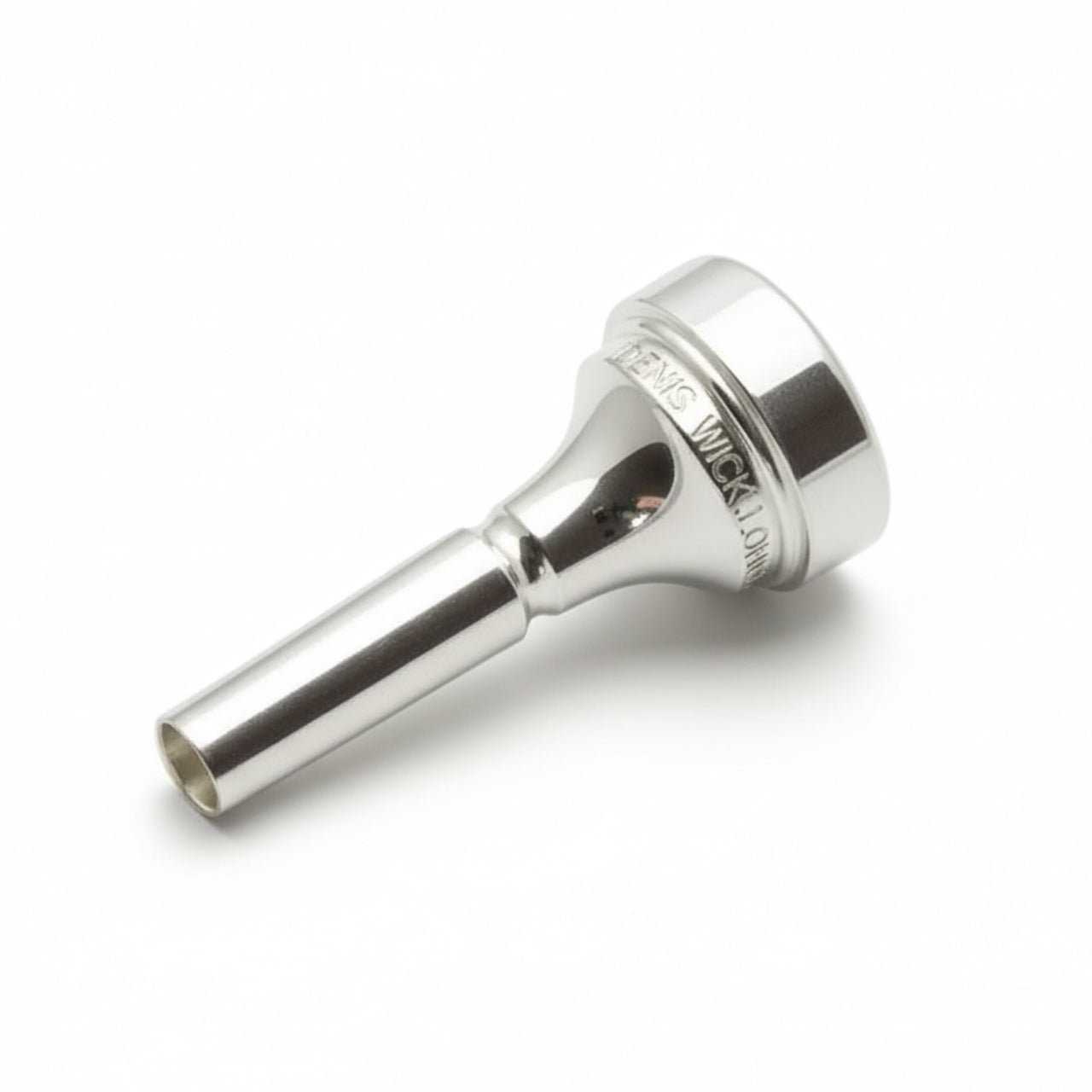
The 4B designation describes a medium-large cup size that provides excellent tonal depth, richness, and projection particularly appropriate for orchestral playing, concert band performance, and ensemble work where the trombone must project powerfully and musically through the full texture of large instrumental ensembles. The cup depth and diameter are carefully calibrated through acoustic engineering to produce the full, warm, and projecting tone that the trombone section needs while simultaneously maintaining the focus, edge, and presence needed for the instrument to be heard clearly and musically in demanding ensemble contexts. The 4B is consistently one of the most popular trombone mouthpiece sizes, offering a beautifully balanced combination of playing comfort, tonal warmth and depth, and technical accessibility.
The silver plating of the playing surface provides several practically important advantages for regular performers. Silver is hypoallergenic and completely safe for players who experience sensitivity or allergic reactions to unplated brass alloy contact. The silver playing surface maintains a consistent, comfortable feel against the lips through extended playing sessions and develops over time a natural patina that many experienced players find actually improves their embouchure seal and connection with the mouthpiece rim in subtle but meaningful ways.
Engineering Quality and Surface Finishing
Denis Wick mouthpieces are machined to genuinely exceptional dimensional tolerances that ensure perfect accuracy and consistent surface quality throughout all of the critical playing surfaces that contact the player’s lips and direct the air column into the instrument. The cup interior is polished to a uniform and smooth finish throughout that promotes efficient and unobstructed airflow and even resonance development. The rim profile has been developed through extensive testing and professional consultation to provide maximum lip comfort during extended playing sessions while maintaining the dimensional precision needed for consistent and accurate pitch production and clean technical articulation.
The backbore specification is acoustically calibrated to optimize the air column resistance and tonal projection characteristics specifically for the trombone’s unique acoustic requirements and playing demands. This precisely engineered backbore provides the appropriate back pressure that effectively supports and strengthens embouchure development over time while contributing to the responsive and immediate tonal character that players of this mouthpiece consistently find encouraging and musically inspiring.
Tonal Character in Performance
The Denis Wick 4B produces a warm, centered, and full trombone tone with genuinely excellent projection capability and a satisfyingly wide dynamic range from very soft to very loud. The sound has the depth, body, and harmonic richness appropriate for demanding orchestral playing contexts while maintaining sufficient brightness and presence for section work, solo performance, and jazz ensemble playing where the trombone voice must project clearly and expressively above accompanying instruments. The tonal evenness across the instrument’s complete practical register reflects the acoustic accuracy and quality of Denis Wick’s manufacturing processes at every stage of production.
Recommendation for Student Players
Music educators at every level frequently and confidently recommend Denis Wick mouthpieces to advancing students as genuinely meaningful and impactful upgrades from the student-grade equipment typically supplied with beginning instrument purchases. The professional-grade manufacturing quality and acoustically superior design accelerate technique development by providing more consistent, accurate, and musical feedback with every tone produced, allowing the player’s developing technique to assert itself more clearly rather than fighting against inadequate equipment. This educational impact on technique development is perhaps the most compelling argument for advancing students to make this investment.
Comprehensive Care and Maintenance Guidelines
Maintaining the pristine condition and optimal performance of acoustic and orchestral instruments is an ongoing responsibility that directly impacts both sound quality and longevity. For woodwind and brass instruments, moisture is the primary enemy. After every single playing session, it is imperative to remove all internal moisture using appropriate swabs, cleaning rods, and polishing cloths. Leaving moisture inside the instrument can lead to the rapid deterioration of pads in woodwinds, the buildup of mold and bacteria, and the accelerated corrosion or seizing of valves and slides in brass instruments. Regularly oiling valves, greasing slides, and applying cork grease where necessary ensures that the mechanical components operate with the buttery smoothness required for expressive playing.
Environmental factors also play a massive role in the health of these instruments. Extreme temperatures and rapid shifts in humidity can cause catastrophic damage, including cracked wood, warped mechanisms, and compromised structural integrity. Instruments should always be stored in their protective cases when not in use, and kept away from direct sunlight, heating vents, and drafty windows. For wooden instruments in particular, maintaining a consistent room humidity or using case humidifiers during dry winter months is absolutely critical to prevent the wood from shrinking and splitting. A well-maintained instrument not only plays better but also retains a significantly higher resale value should you choose to upgrade in the future.
Optimizing Your Practice and Skill Development
Acquiring a quality instrument is just the first step on a lifelong musical journey; the real progress happens in the practice room. A highly effective practice routine is characterized by consistency, focus, and structured goal-setting. Begin every session with long tones and fundamental breathing exercises. Tone production and breath control are the foundation of all wind and brass playing, and dedicating even 10 minutes a day to holding steady, resonant notes across your entire dynamic range will yield profound improvements in your overall sound. Combine this with scale and arpeggio work using a metronome to build unshakeable finger dexterity, intonation, and rhythmic precision.
Furthermore, developing your musical ear is just as important as developing your physical technique. Spend time actively listening to master performers of your instrument, paying close attention to their phrasing, articulation, vibrato, and dynamic control. Try to mimic these nuances in your own playing. Recording your practice sessions is an invaluable tool for objective self-assessment; it allows you to hear pitch inaccuracies, rhythmic rushing or dragging, and tonal inconsistencies that you might miss while actively playing. Incorporating a mix of technical drills, etudes, and challenging repertoire will keep your practice sessions engaging and ensure continuous, well-rounded musical development.
The Importance of Professional Servicing
While daily maintenance is the responsibility of the player, regular professional servicing is equally vital. Even with meticulous care, pads will eventually wear out, corks will compress, springs will lose their tension, and subtle mechanical adjustments will drift out of alignment over time. Taking your instrument to a qualified repair technician for a ‘Clean, Oil, and Adjust’ (COA) at least once a year is highly recommended. A skilled technician can spot and correct minor issues—such as tiny air leaks, sluggish key action, or misaligned valves—before they develop into major, costly repairs. This preventative maintenance ensures that your instrument will always perform at its absolute best, allowing you to focus entirely on your music.
Conclusion
The Denis Wick 4B Silver-Plated Trombone Mouthpiece is an outstanding and fully justified choice for advancing students and professional players who are seeking reliable, musically sophisticated, and professionally engineered trombone equipment. Its combination of precision manufacturing quality, warm and projecting tonal character, and the practical advantages of silver plating makes it a genuinely long-term investment that pays consistent dividends in improved playing comfort, enhanced tonal quality, and greater musical satisfaction throughout every stage of a trombonist’s developing and professional musical career.
