Post
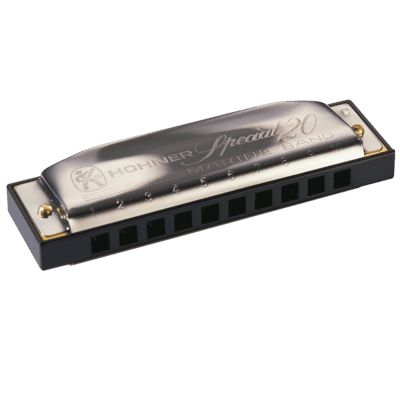
Hohner Special 20 Harmonica Key of C: The Master’s Choice for Blues
May
Hohner Special 20 Harmonica Key of C: The Master’s Choice for Blues
The Hohner Special 20 Harmonica in the Key of C is one of the most beloved, widely used, and consistently praised harmonicas ever designed and manufactured. Favored by blues legends, celebrated folk musicians, country artists, and pop songwriters throughout the world, the Special 20 combines genuinely professional-grade acoustic tone, remarkably comfortable playability, and excellent durability in a thoughtfully refined design that has remained essentially unchanged for decades because it has simply proven so consistently effective and musically satisfying. This review explores comprehensively why the Special 20 is the harmonica that serious professional players return to with total confidence time and again throughout their careers.
Hohner’s Unmatched Harmonica Heritage
Matthias Hohner founded his harmonica company in the town of Trossingen, Germany in 1857 with a small workshop and enormous ambition, and the company has grown over the following 165 years into the world’s most respected and historically significant harmonica manufacturer. Hohner harmonicas have provided the essential musical voice for musicians working across every important style in popular music history including jazz, blues, country, folk, rock, and pop, appearing on a genuinely incalculable number of classic recordings and defining the very sound of modern harmonica playing across all these genres. The Special 20 is among their most commercially and musically successful models and stands as perhaps their most beloved diatonic harmonica among serious players.
Construction and Material Innovation
The Special 20 features a high-quality plastic comb that offers several distinct and practically important advantages over the traditional wooden combs used in many other diatonic harmonicas. Plastic is entirely impervious to moisture and swelling, completely eliminating the problematic expansion and distortion that affects wooden combs when exposed to the inevitable moisture from breath during extended playing sessions. This fundamental moisture resistance means the Special 20 maintains completely consistent playing response and comfortable lip contact from the very first note to the very last, even during the most extended and demanding playing sessions at jam sessions, recording dates, or live performances.
The brass reed plates are riveted directly to the comb using recessed mounting screws that allow the plates to be cleanly disassembled from the comb body for tuning adjustments, thorough cleaning, and individual reed replacement when necessary over the instrument’s long service life. The reeds themselves are precision-stamped and individually tuned to equal temperament, providing accurate pitch production across all twenty playing holes throughout the harmonica’s complete range.
Tone and Sound Character
The Special 20 produces a warm, full, and deeply musical harmonica tone that sits beautifully and naturally in virtually any musical context from acoustic folk to electric blues to country ballad. The key of C is the most practically versatile and immediately useful harmonica key, making it the essential starting point and most important single instrument for building a comprehensive harmonica collection. The tonal character is warm and singing in the lower register, full and projecting in the middle range, and clear and bright in the upper register, providing a complete and musically balanced voice across the entire instrument.
Blues playing, with its defining characteristic bent notes and deeply expressive playing technique, comes completely and beautifully alive on the Special 20. The reeds respond with impressive consistency to the various bending techniques that give blues harmonica its deeply emotive and distinctive musical character. The accessible and reliable bend response is central to the Special 20’s extraordinary reputation among blues players worldwide and is frequently cited as the primary reason for choosing it over competing harmonicas at similar and even higher price points.
Bend Response and Expressive Technique
The Special 20’s carefully optimized reed geometry and factory gap settings make it one of the most consistently bend-friendly diatonic harmonicas available to players at any price. Bending — the technique that physically lowers individual reed pitches by modifying oral cavity shape and air direction — is absolutely fundamental to blues, country, and folk harmonica playing and is the most important single expressive technique available to developing players. The Special 20’s beautifully responsive reeds consistently reward developing bending technique with accurate, reliable, and musically satisfying results that help students learn the technique efficiently and maintain the motivation to continue practicing what is initially the most challenging aspect of serious harmonica playing.
Outstanding Durability
The combination of stable plastic comb and high-quality brass reeds makes the Special 20 exceptionally durable under the demands of regular and intensive playing. The plastic comb experiences none of the warping, cracking, or swelling that affects wood combs under moisture exposure, and the brass reeds provide excellent longevity under the physical demands of regular bending and sustained playing. Many dedicated players and professional performers report using their Special 20s for years without any significant deterioration in playing response, tonal quality, or physical condition.
Comprehensive Care and Maintenance Guidelines
Maintaining the pristine condition and optimal performance of acoustic and orchestral instruments is an ongoing responsibility that directly impacts both sound quality and longevity. For woodwind and brass instruments, moisture is the primary enemy. After every single playing session, it is imperative to remove all internal moisture using appropriate swabs, cleaning rods, and polishing cloths. Leaving moisture inside the instrument can lead to the rapid deterioration of pads in woodwinds, the buildup of mold and bacteria, and the accelerated corrosion or seizing of valves and slides in brass instruments. Regularly oiling valves, greasing slides, and applying cork grease where necessary ensures that the mechanical components operate with the buttery smoothness required for expressive playing.
Environmental factors also play a massive role in the health of these instruments. Extreme temperatures and rapid shifts in humidity can cause catastrophic damage, including cracked wood, warped mechanisms, and compromised structural integrity. Instruments should always be stored in their protective cases when not in use, and kept away from direct sunlight, heating vents, and drafty windows. For wooden instruments in particular, maintaining a consistent room humidity or using case humidifiers during dry winter months is absolutely critical to prevent the wood from shrinking and splitting. A well-maintained instrument not only plays better but also retains a significantly higher resale value should you choose to upgrade in the future.
Optimizing Your Practice and Skill Development
Acquiring a quality instrument is just the first step on a lifelong musical journey; the real progress happens in the practice room. A highly effective practice routine is characterized by consistency, focus, and structured goal-setting. Begin every session with long tones and fundamental breathing exercises. Tone production and breath control are the foundation of all wind and brass playing, and dedicating even 10 minutes a day to holding steady, resonant notes across your entire dynamic range will yield profound improvements in your overall sound. Combine this with scale and arpeggio work using a metronome to build unshakeable finger dexterity, intonation, and rhythmic precision.
Furthermore, developing your musical ear is just as important as developing your physical technique. Spend time actively listening to master performers of your instrument, paying close attention to their phrasing, articulation, vibrato, and dynamic control. Try to mimic these nuances in your own playing. Recording your practice sessions is an invaluable tool for objective self-assessment; it allows you to hear pitch inaccuracies, rhythmic rushing or dragging, and tonal inconsistencies that you might miss while actively playing. Incorporating a mix of technical drills, etudes, and challenging repertoire will keep your practice sessions engaging and ensure continuous, well-rounded musical development.
The Importance of Professional Servicing
While daily maintenance is the responsibility of the player, regular professional servicing is equally vital. Even with meticulous care, pads will eventually wear out, corks will compress, springs will lose their tension, and subtle mechanical adjustments will drift out of alignment over time. Taking your instrument to a qualified repair technician for a ‘Clean, Oil, and Adjust’ (COA) at least once a year is highly recommended. A skilled technician can spot and correct minor issues—such as tiny air leaks, sluggish key action, or misaligned valves—before they develop into major, costly repairs. This preventative maintenance ensures that your instrument will always perform at its absolute best, allowing you to focus entirely on your music.
Conclusion
The Hohner Special 20 Harmonica in the Key of C is definitively the finest all-around diatonic harmonica available for players at every level. Its combination of warm, musical tone, outstanding and reliable bend response, supremely comfortable playability, and remarkable long-term durability makes it the most consistently recommended harmonica by players and teachers who have extensive experience with the full range of available instruments. Whether you are discovering the harmonica for the very first time or adding a quality instrument to an established collection, the Special 20 delivers everything expected and consistently inspires musical creativity and expression beyond what any other harmonica at this price offers.
