Post
Best Meinl 8″ Fiber Skyndeep Djembe: Authentic African Percussion
May
Meinl 8 Fiber Skyndeep Djembe: Authentic African Percussion
Meinl 8 Fiber Skyndeep Djembe brings the authentic voice and cultural richness of West African percussion to players who are seeking a quality entry point into the compelling world of hand drumming.
Meinl’s innovative Fiber Skyndeep technology thoughtfully combines a lightweight and durable fiberglass shell with a specially formulated synthetic head material to create a djembe that delivers consistent and authentic musical performance across diverse environmental conditions that would challenge traditional all-natural instruments.
This review examines why this djembe is an excellent choice for both beginning hand drummers and established percussionists seeking a reliable and weather-resistant instrument.
The Djembe’s Deep Cultural Roots
The djembe originated in West Africa and has been a central and sacred component of the musical traditions of many diverse cultures throughout the region for centuries before its discovery and adoption by Western musicians.
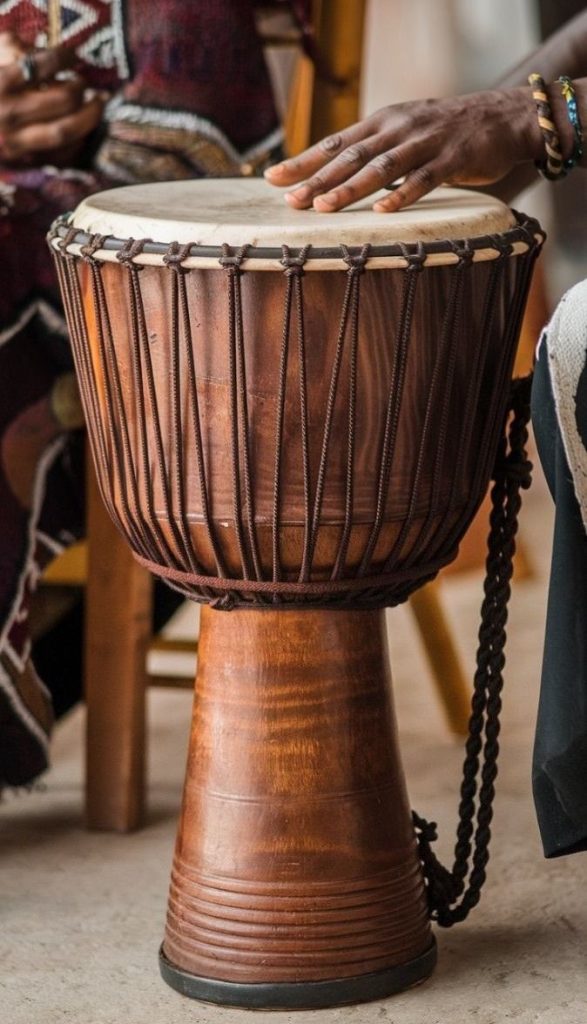
Traditionally carved from a single piece of hardwood such as lenke or djalla and covered with goat skin, the djembe produces three fundamental and distinct tonal zones — the deep resonant bass, the clear mid-range tone, and the bright and cutting slap — that provide the complete rhythmic and melodic foundation for enormously complex African percussion traditions.
Meinl 8 Fiber Skyndeep Djembe adapts this ancient and culturally significant instrument thoughtfully for contemporary players while preserving the essential musical character and tonal authenticity that makes it so compelling.
Fiber Skyndeep Technology Explained
Meinl 8 Fiber Skyndeep Djembe head is a proprietary synthetic material developed through extensive research to replicate the playing feel, tonal response, and expressive character of natural goatskin while offering dramatically improved resistance to the temperature and humidity changes that make traditional skin heads challenging to maintain consistently.
Traditional natural skin heads require frequent tuning adjustments as environmental conditions change throughout a day or across seasons, while Skyndeep heads maintain their tension and tonal character across a much wider range of environmental conditions without constant attention. This inherent stability makes the instrument dramatically more practical and reliable for players in varying climates or performance environments where conditions cannot be controlled.
The fiberglass shell that houses the Meinl 8 Fiber Skyndeep Djembe head is lightweight, extremely durable, and acoustically resonant, producing clear fundamental tones with natural and pleasing overtone development. The uniform construction of the fiberglass shell creates completely consistent acoustic properties across every instrument, unlike natural wood shells which can vary significantly in density, moisture content, and acoustic response from one instrument to the next.
Three Fundamental Tones and Playing Technique
Meinl 8 Fiber Skyndeep Djembe Djembe produces the three essential and defining djembe tones with good definition and appropriate musical character. The bass tone, produced by striking the center of the head with a flat, open, and relaxed hand, resonates deeply and satisfyingly.
The tone, played near the edge of the head with fingers held together and slightly curved, produces a clear, focused, and distinctly pitched mid-range sound that carries melodic information in ensemble contexts. The slap, produced using a specific curved hand technique with particular finger placement, cuts through rhythmic textures with bright, snapping, and percussive attack that creates the rhythmic accents and driving momentum essential to African percussion ensemble playing.
Ergonomics and Physical Comfort
The 8-inch playing diameter is an excellent and ergonomically appropriate size for players of a wide range of hand sizes, providing comfortable reach and access across the entire head surface for all three fundamental tones and their many expressive variations.
The drum sits naturally and stably between the legs in the traditional playing position, with its weight and proportions properly balanced for extended playing sessions without causing physical strain or uncomfortable positioning. The smooth and comfortable rim surface prevents leg discomfort even during long practice sessions or extended performances.
Portability and Transportation
The lightweight fiberglass construction makes the Meinl 8 Fiber Skyndeep Djembeexceptionally easy to transport to classes, community drumming circles, outdoor performances, and anywhere else the musical occasion might arise. The compact 8-inch size fits comfortably into standard djembe carry bags and backpacks, and the overall instrument weight is light enough to carry comfortably for meaningful distances without physical strain, making it a genuinely portable and practical performance instrument for active musicians.
Durability Advantages
The thoughtful combination of fiberglass shell and synthetic Meinl 8 Fiber Skyndeep Djembe head makes this djembe substantially more durable and resilient than traditional all-natural construction instruments under the demands of regular playing and transportation. The synthetic head resists the tearing, cracking, and delamination that can affect natural goatskin heads under vigorous playing or sudden environmental changes.
The fiberglass shell is essentially impervious to the cracking, warping, and checking that affects wooden shells when subjected to extreme moisture or temperature conditions. These durability advantages translate directly to lower maintenance costs and greater peace of mind for performing musicians.
Essential Drum and Percussion Maintenance
Proper maintenance of drums and percussion instruments is crucial for preserving their tonal quality and structural integrity. For acoustic drums, this begins with regular inspection and tuning of the drumheads. Drumheads stretch and wear out over time, losing their resonance and responsiveness.
It is generally recommended that active players replace their batter heads every few months, while resonant heads can typically last a year or more. When changing heads, take the opportunity to wipe down the bearing edges with a clean, dry cloth to ensure smooth contact between the shell and the new head, which is essential for accurate tuning and optimal sound projection.
Hardware maintenance is equally important. Lugs, tension rods, and pedals endure significant mechanical stress and require periodic lubrication to function smoothly. Applying a small amount of white lithium grease or a specialized drum hardware lubricant to the tension rods will prevent cross-threading and make fine-tuning much easier.
For pedals and hi-hat stands, keeping the moving parts clean of dust and grit and lightly lubricating the chain and hinges will ensure a fast, responsive action. Cymbal care is a topic of much debate among drummers, but generally, wiping them down with a soft microfiber cloth after playing prevents the buildup of corrosive oils. If you choose to use cymbal polish, always ensure it is specifically formulated for your cymbal’s finish (traditional or brilliant) to avoid damaging the protective coating.
Developing a Solid Practice Routine
Having the right percussion equipment is merely the foundation; developing your skills requires a disciplined and well-structured practice routine. The core of any drummer’s practice should revolve around the metronome.
Timekeeping is the primary function of a drummer in almost any musical setting, so practicing rudiments, grooves, and fills to a click track is non-negotiable for serious improvement. Start with basic stickings like single strokes, double strokes, and paradiddles, practicing them slowly and focusing on stick height, rebound, and dynamic consistency before gradually increasing the tempo.
In addition to technical exercises, musicality should be a primary focus. Playing along to recordings of various genres—from rock and jazz to Latin and funk—will drastically expand your vocabulary and help you understand how different grooves fit into different musical contexts.
Recording yourself regularly is one of the most powerful tools for self-evaluation. What feels perfectly in time and dynamically balanced while you are playing may sound completely different upon playback. By critically listening to your own recordings, you can identify micro-timing issues, inconsistent velocities, and phrasing weaknesses that need attention in your next practice session.
Ergonomics and Long-Term Health
Finally, do not overlook the importance of ergonomics when setting up your instrument. Drumming is a physically demanding activity, and a poor setup can lead to chronic fatigue and repetitive strain injuries over time. Your drum throne should be adjusted to a height where your thighs are roughly parallel to the floor or angled slightly downward.
The snare drum and toms should be positioned so that you can strike the center of the heads without having to reach awkwardly or contort your wrists. Cymbals should be angled slightly toward you to maximize stick rebound and prevent premature cracking. Investing time in finding your optimal setup will pay massive dividends in your comfort, endurance, and overall musical longevity.
Conclusion
Meinl 8 Fiber Skyndeep Djembe offers genuine tonal quality, innovative and practical construction, and outstanding durability and weather-resistance in an authentic djembe design that honors the instrument’s cultural heritage while making it practical for modern playing conditions.
For players who are beginning their hand drumming journey or who require a reliable and consistent instrument for regular use across varying environmental conditions, the Fiber Skyndeep delivers genuine djembe voice and authentic playing experience with modern reliability and practical convenience that traditional instruments cannot match.
